The Most Famous Pablo Picasso Paintings (And Some Abstract Heirs)
It’s no simple task to quantify the most famous Pablo Picasso paintings. Pablo Picasso (otherwise known by his full baptismal name, Pablo Diego José Francisco de Paula Juan Nepomuceno de los Remedios Crispín Cipriano de la Santísima Trinidad Ruíz y Picasso!) is listed in the Guinness Book of World Records as history’s most prolific professional painter. He created between 1,300 and 1,900 paintings between the time of his first art classes at age 7 and his death at 91. Most remarkable however isn’t the number of Picasso’s paintings, but how many are considered masterworks. Realizing that no Picasso top list can be uncontroversial, our humble attempt includes famous works from each of his many phases, shining light on the entirety of his impressive career.
And we decided to add a pinch of complexity to the task: Picasso was, for the most part, a figurative painter. He painted people, bulls, guitars, and wars. Yet, his radical innovations laid the direct groundwork for the abstract art that followed. In this article, we seek to explore this lineage by pairing each of his iconic masterpieces with a "Contemporary Echo", an abstract artist from the IdeelArt roster whose work resonates with the specific spirit, technique, composition or emotional weight of Picasso's original. While connecting a portrait of a 1905 teenager to a 2026 abstract painting is an exercise in interpretation rather than direct succession, we believe these pairings reveal a fascinating dialogue between the history of modern art and its living, breathing future.
The Blue Period (1901 - 1904)
This era is so named for the blue hues prevalent in so many of Picasso’s paintings from the time. Picasso himself attributed his choice to paint only in blues to the depression he felt after the death of his friend Carlos Casagemas, who shot himself in the head at a Paris café. One of the most beloved works from this period is The Old Guitarist (1903). It depicts an elderly, emaciated man in tattered clothing, hunched over his guitar on the streets of Barcelona.

Pablo Picasso - The Old Guitarist, 1903. The Art Institute of Chicago. © 2019 Estate of Pablo Picasso / Artists Rights Society (ARS), New York
This painting is more than a portrait of poverty; it is a profound meditation on the solace of art. The figure’s elongated limbs and angular posture reveal Picasso’s deep study of the Spanish master El Greco, connecting modern suffering with art historical tradition. The guitar, the only element in the painting that shifts slightly away from the pervasive blue, symbolizes art as a lifeline, a source of warmth and survival in a cold world.
Picasso wasn't an abstract artist, yet his Blue Period relies on a principle that defines abstraction: that color itself is an emotion. He used blue to create an atmosphere of silence and introspection.
Today, Scottish artist Eric Cruikshank takes that logic to its absolute conclusion. Where Picasso relied on the figure of the beggar to convey sadness, Cruikshank asks if color alone is enough to carry the weight of the feeling. Using a rigorous, subtractive process to remove his own brushstrokes, Cruikshank creates "veils" of atmospheric color that, like Picasso’s blue, capture the elusive memory of a feeling rather than a literal picture of the world. He proves that you don't need a guitar to paint a song.

Eric Cruikshank - P076, 2024
The Rose (Pink) Period (1904 – 1906)
In 1904, Picasso fell in love with Fernande Olivier, and altered the direction of his style in two profound ways. First, in a transition from grief to romance, he stopped painting in blue hues and shifted to shades of pink, orange and earth tones. Second, he transitioned away from meticulous renderings of the human form toward more stylized human depictions. The most famous example from this period is Boy with a Pipe.

Pablo Picasso - Garçon à la Pipe (Boy with a Pipe), 1905. Helen Birch Bartlett Memorial Collection. 1926.253. © 2019 Estate of Pablo Picasso / Artists Rights Society (ARS), New York
The subject is "P’tit Louis," a local teenage drifter who frequented Picasso’s studio in Montmartre. While the painting retains a sense of melancholy, the wreath of roses and the floral background signal a departure from the despair of the Blue Period. The boy’s gaze is detached, almost mystical, and the pipe he holds, positioned oddly in his hand, serves as a symbol of bohemian life and introspection. This work marks a crucial moment where Picasso begins to prioritize mood and lyricism over strict realism, creating an image of adolescent fragility that is both timeless and haunting.
In his Rose Period, Picasso moved beyond simple representation to capture a mood—a feeling of fragility and poetry that existed between the subject and the viewer.
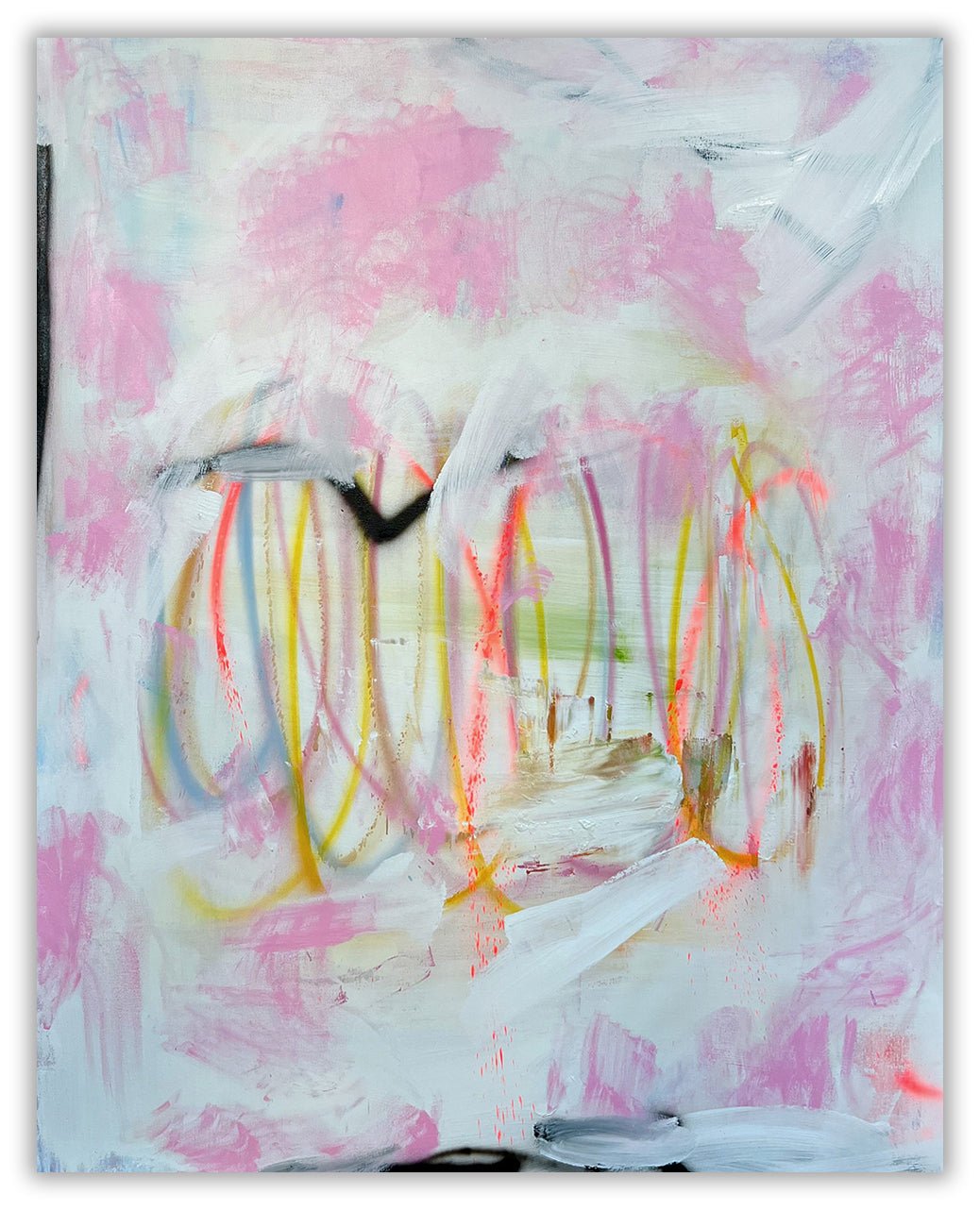
Today, Paris-based artist Macha Poynder pursues a similar poetic ambition through abstraction. Influenced by the philosophy that "colors are sounds," she builds compositions that function like visual chords. Just as Picasso used the color rose to shift the emotional key of his work from despair to fragile warmth, Poynder uses layered washes of color and lyrical, calligraphic lines to create "windows where the visible and invisible touch." Her work proves that the "poetic" in art isn't about the subject matter, but about the resonance of the surface itself.

Macha Poynder - We are all Phoenixes, even if we don't know it - 2020
African Period (1907 – 1909)
Influenced by Iberian sculptures and African masks, Picasso released himself from traditional perspective entirely. Simultaneously, he became inspired by the flatness of the later works of Paul Cézanne, who died in 1906. During this time of rapid experimentation, Picasso significantly reduced the visual language of his paintings, leaning ever more toward abstraction. The most significant painting from this period is Les Demoiselles d'Avignon, which is considered proto-Cubist, as it contains all of the essential elements that would eventually come to define that style.
The painting depicts five nude women in a brothel, their bodies fractured into sharp, jagged planes that seem to slash through the space they inhabit.

Pablo Picasso - Les Demoiselles d'Avignon, 1907. Museum of Modern Art, New York. © 2019 Estate of Pablo Picasso / Artists Rights Society (ARS), New York
This wasn't just a new style; it was an act of aggression against the "polite" art of the past. The two figures on the right wear mask-like faces that are terrifyingly foreign to the Western canon of beauty. By merging the figure with the background and showing multiple viewpoints simultaneously, Picasso didn't just paint a scene, he dismantled the way we see reality. This radical deconstruction laid the direct groundwork for Cubism.
American painter Susan Cantrick is a contemporary heir to this intellectual lineage. Her work employs what critics have called "the means of a cubist who decomposes and recreates space." Like Picasso, she merges hard-edged architectural structures with fluid, gestural marks, creating a "hybrid" visual language. But where Picasso fractured the human body, Cantrick fractures the act of perception itself, breaking down the canvas into "digital and analog" layers to reveal the complex, fragmented way we process information in the modern world.

Susan Cantrick - SBC 227 - 2019 - ©the artist
Cubism & Collage (1908 – 1912)
In addition to inventing Cubism, which shattered the Renaissance tradition of single-point perspective, Picasso and his contemporary Georges Braque simultaneously began experimenting with adding "real world" debris to their canvases. This move challenged the very definition of what a painting could be. One of the most famous works from this era is Still Life with Chair Caning (1912).

Pablo Picasso - Still Life with Chair Caning, 1912. Musée Picasso. © 2019 Estate of Pablo Picasso / Artists Rights Society (ARS), New York
This small, oval-shaped work is widely considered the first fine-art collage. Picasso pasted a piece of oilcloth printed with a chair-caning pattern directly onto the canvas and framed it with a piece of rope. By incorporating mass-produced, industrial materials into a "high art" composition, Picasso blurred the line between art and object, reality and illusion. It was a conceptual leap that opened the door for everything from Dadaism to Pop Art, proving that the materials of the street belonged in the museum.
Picasso’s introduction of rope and oilcloth proved that painting didn't have to be flat. It could be a physical construction made of the world itself.
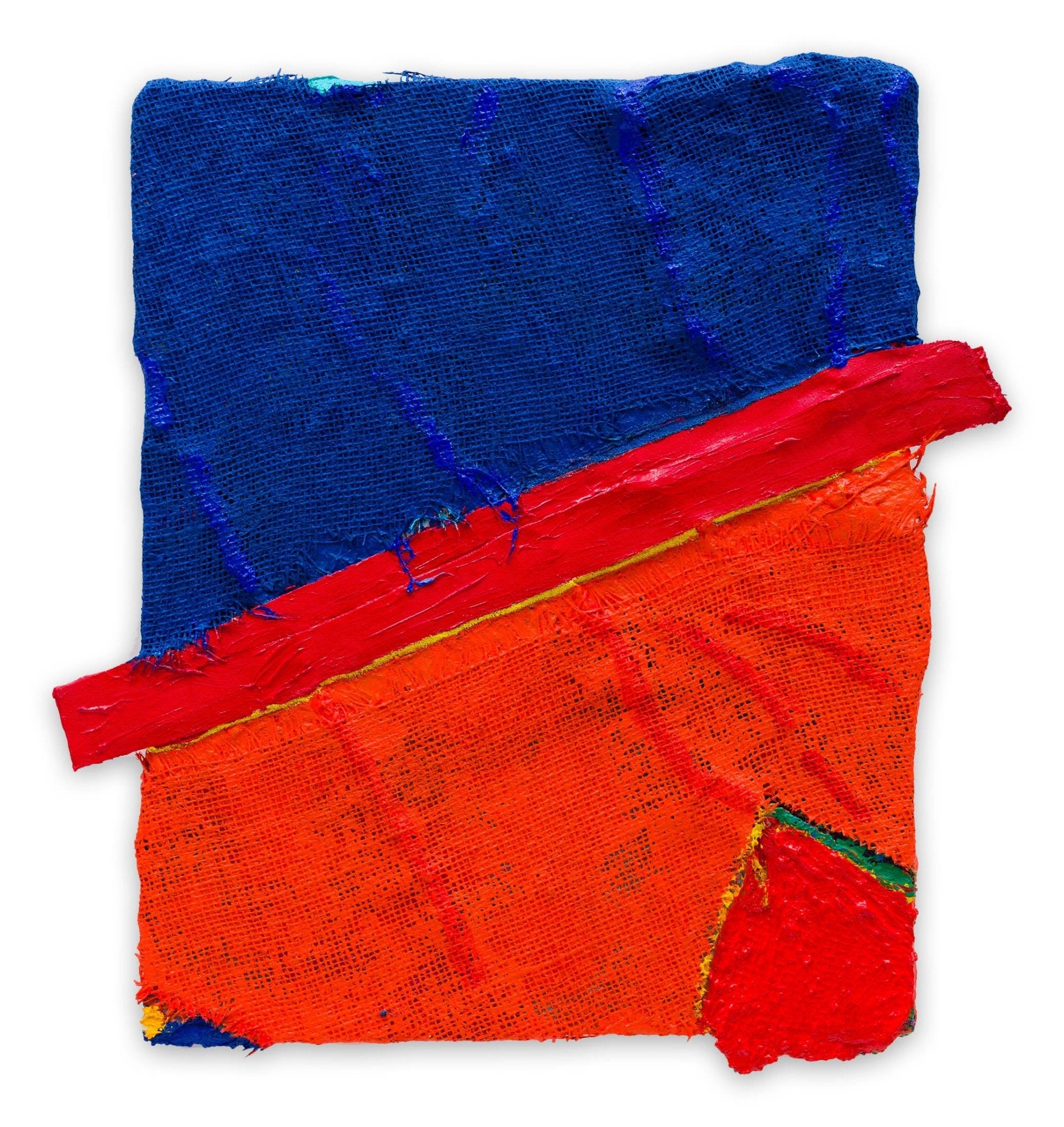
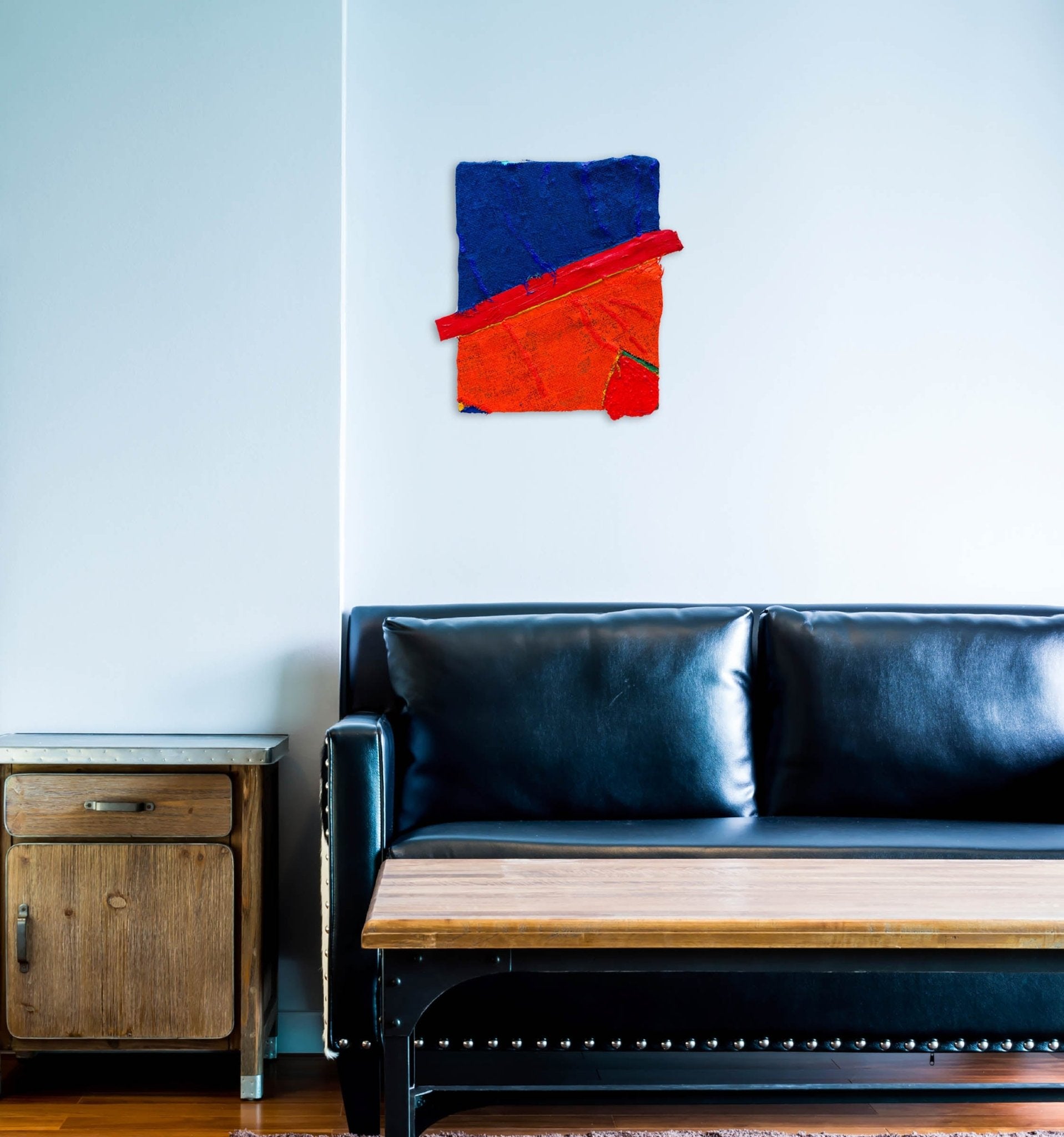
British artist Anthony Frost carries this legacy forward with visceral energy. Rather than painting illusions of texture, he builds his surfaces using the raw materials of his coastal environment—sailcloth, fruit netting, burlap, and pumice. Just as Picasso used rope to frame his composition, Frost uses industrial netting and rubber to create relief-like layers that protrude from the canvas. His work is a direct descendant of the collage revolution: a reminder that art is not just an image to look at, but a physical object to be experienced.

Anthony Frost - Crackloud - 2018 - ©the artist
Neo-Classicism (1918 - 1928)
In 1918, shortly before the end of World War I, Picasso married his first wife, Olga Khokhlova, a ballerina with the Ballets Russes. The post-war era brought a "Return to Order" across the arts in Europe, and Picasso followed suit, temporarily moving away from the fragmentation of Cubism toward a monumental, sculptural style inspired by the French master Ingres.
A perfect example is Portrait of Olga in an Armchair (1918).

Pablo Picasso - Portrait d'Olga dans un fauteuil (Portrait of Olga in an Armchair), 1918. Musée Picasso Paris, Paris, France. © 2019 Estate of Pablo Picasso / Artists Rights Society (ARS), New York
This painting is a masterclass in tension. Picasso renders Olga’s face with photographic, porcelain-like precision, adhering to strict classical rules. However, he leaves the rest of the canvas in a state of deliberate "non-finito" (unfinished). The armchair is a flat graphic pattern, and the dress dissolves into a raw, linear sketch against the empty background. By juxtaposing extreme realism with bare canvas, Picasso asserts that a painting is not a window into reality, but a constructed surface where the finished and the unfinished can coexist.
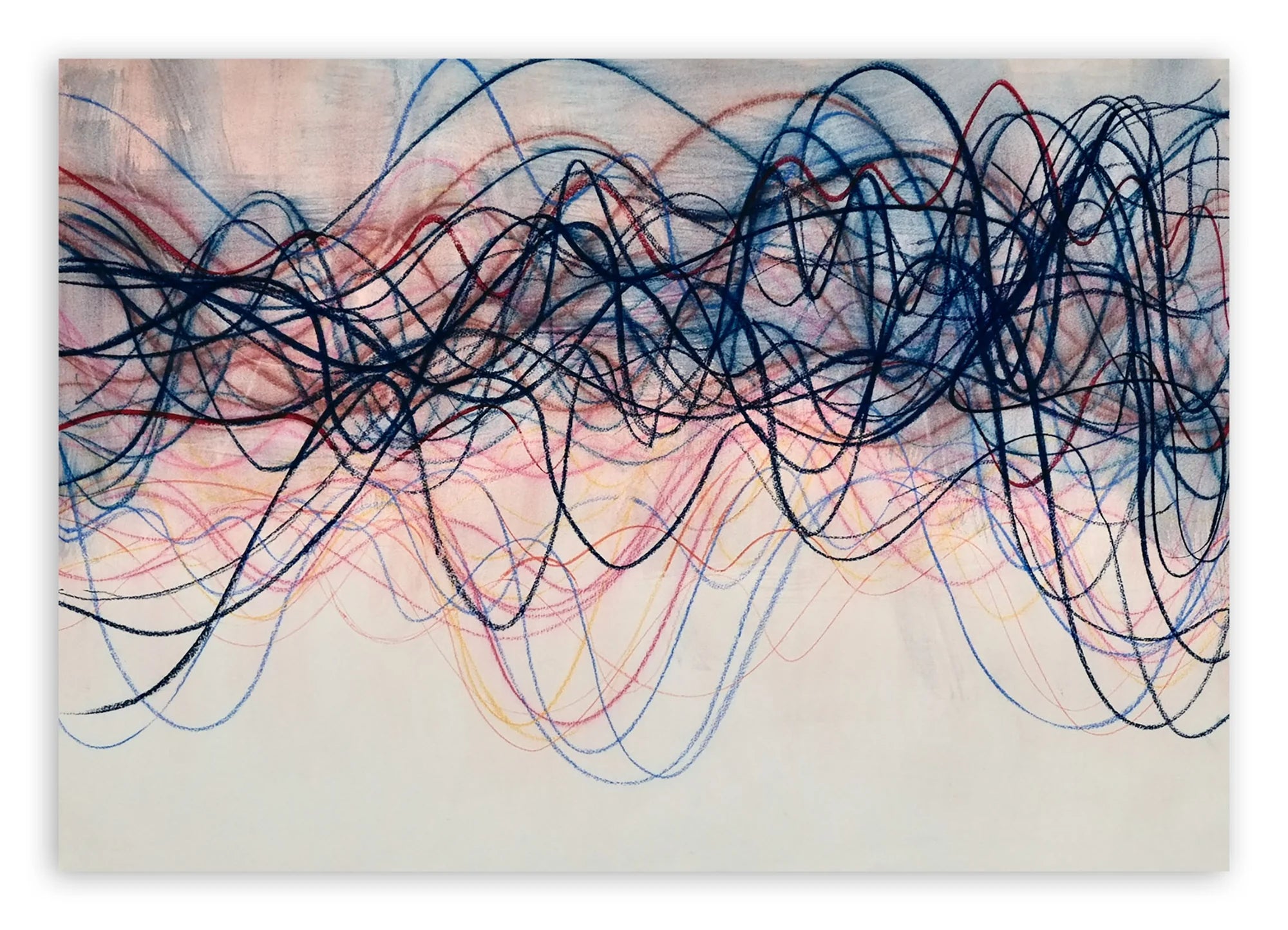
In this portrait, Picasso demonstrated that an empty space is not "nothing": it is an active design element. He used the raw line to define the volume of the dress without filling it in.
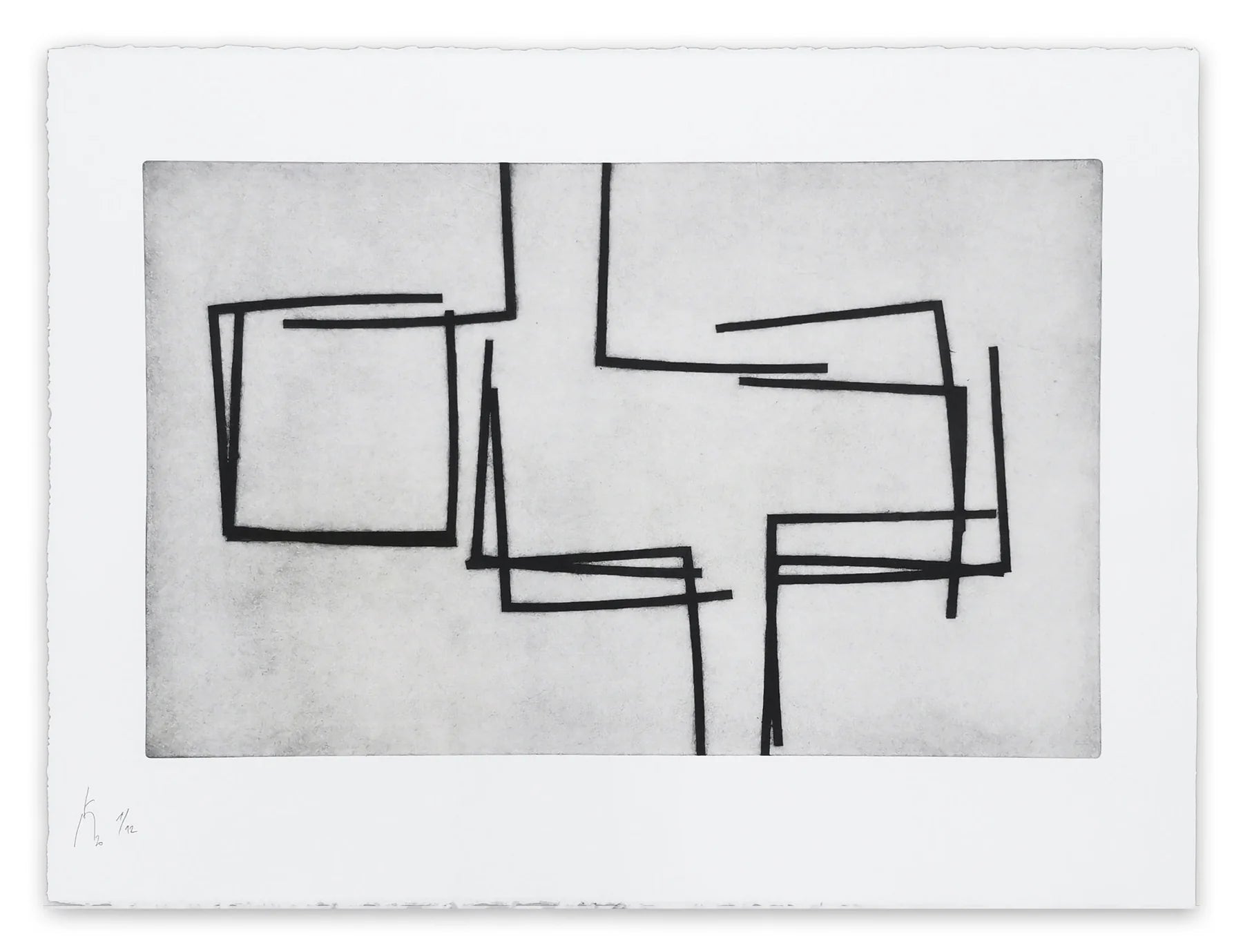
French artist Marie de Lignerolles builds her practice around this exact principle. Her work explores the concepts of "counter-form" and the "void," treating empty space as a "presence within absence." Like Picasso’s treatment of Olga’s dress, de Lignerolles uses the line as a primary structural tool, allowing the white of the paper to hold as much weight as the color. She proves that in art, what you leave out is often just as important as what you put in.

Marie de Lignerolle - Méditerranée - 2024 - ©the artist
Surrealism (1928 - 1948)
In the late 1920s and early 30s, influenced by the Surrealist movement and his passionate affair with Marie-Thérèse Walter, Picasso began to distort the human figure in radical new ways. This era produced some of his most sensual and psychologically charged work.
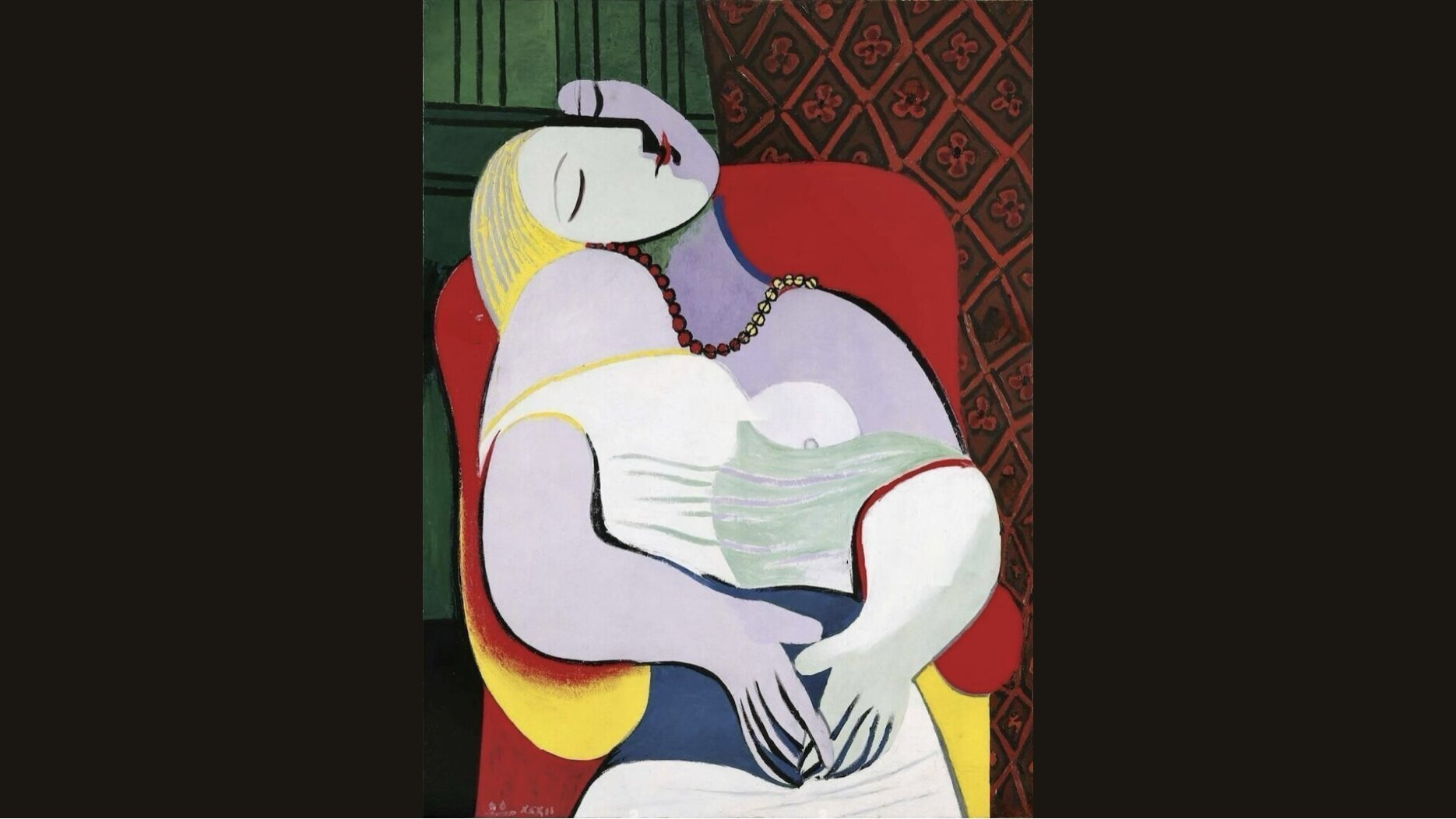
Two key examples from this period are Figures at the Seaside (1931) and The Dream (1932) (see header image).

Pablo Picasso - Figures at the Seaside, 1931. © 2019 Estate of Pablo Picasso / Artists Rights Society (ARS), New York
In Figures at the Seaside, two figures locked in a kiss are reduced to smooth, biomorphic shapes that look more like weathered stones or bones than human anatomy. It is a grotesque yet tender depiction of desire, stripping away the literal to reveal a psychological truth. Similarly, The Dream portrays Marie-Thérèse in a state of erotic reverie, her face split by a phallic profile, her body rendered in soft, curving lines that echo the fluidity of the subconscious mind. Together, these works showcase Picasso’s mastery of biomorphism, turning the body into a landscape of strange, soft shapes to express the hidden world of dreams and desire.
Picasso used these surreal, organic shapes to show how the subconscious mind distorts reality, turning the human form into something fluid and cellular.
Contemporary artist Daniela Marin explores this same "internal landscape." Her paintings are alive with "vibrant, protozoan shapes" and looping forms that mirror the organic, biological curves of Picasso’s Surrealist figures. Balancing tension with natural harmony, Marin suggests a world where microscopic life and human emotion intertwine, carrying forward the Surrealist tradition of looking inward to find the shapes of nature.

Daniela Marin - Bario Tropico XI - 2023 - ©the artist
Guernica (1937)
From 1936 to 1939, Spain was in a state of civil war between Nationalist and Republican forces. The Nationalists were aligned with Fascist powers in Germany and Italy. In spring of 1937, German and Italian airplanes bombed the Basque village of Guernica at the request of Spanish Nationalists. This was the first time a modern air force attacked an unarmed civilian population. Earlier that year, the Spanish Republicans had commissioned Picasso to paint a mural for the 1937 World’s Fair in Paris. The work Picasso created for the fair responded to the bombing: it was Guernica.

Pablo Picasso - Guernica, 1937. Museo Nacional Centro de Arte Reina Sofía. © 2019 Estate of Pablo Picasso / Artists Rights Society (ARS), New York
Widely considered Picasso's masterpiece, Guernica depicts a nightmarish scene of twisted bodies and screaming animals amidst urban ruins. Aesthetically, it blends the fragmentation of Cubism with the nightmare logic of Surrealism. By restricting his palette to stark black, white, and gray, Picasso evoked the gritty immediacy of newspaper photography, blurring the line between fine art and journalism. It remains the ultimate anti-war statement, proof that art can be a weapon against brutality.
Picasso painted Guernica to ensure the world could not look away from a massacre. He proved that the artist has a moral duty to be a witness to destruction.
German artist Reiner Heidorn carries this mantle of "visual witnessing" into the 21st century, but his focus shifts from the destruction of war to the destruction of the planet. Using his signature "Dissolutio" technique, Heidorn creates massive, immersive oil paintings that address climate change and the dissolving relationship between humanity and nature. Just as Picasso used the mural format to confront the viewer with the violence of his time, Heidorn uses scale and intense, dissolving textures to confront us with the "ecological violence" of ours, demanding that we do not look away from the disappearance of the natural world.

Reiner Heidorn - Nightplants - 2025 - ©the artist
Post-WWII
Until his death in 1973 Picasso continued making art, often returning to the methods and styles he had explored earlier in his life. After World War II, Picasso moved to the South of France and entered his final, prolific phase. He had become the world’s most famous living artist and was commissioned to create everything from large-scale public works to common housewares. In 1953, he met the woman who would become his second wife, Jacqueline Roque. Picasso was 72 at the time; Jacqueline was 27. He painted her more than any other woman in his life: over 400 times in just 20 years. A striking example of this obsession is Jacqueline with Flowers (1954).

Pablo Picasso - Jacqueline with Flowers, 1954. Musée Picasso, Paris, France. © 2019 Estate of Pablo Picasso / Artists Rights Society (ARS), New York
In this portrait, Picasso abandons the soft curves of his earlier mistresses for a rigid, hieratic style. Jacqueline is depicted with an elongated neck and wide, staring eyes (her signature feature), resembling a modern Sphinx. The paint is applied with a new sense of urgency and speed, foreshadowing the raw, "undeveloped" style of his final years. At the time, critics dismissed these late works as the scribbles of a senile old man; today, they are recognized as the precursors to Neo-Expressionism, celebrated for their ferocity and freedom.
In his portraits of Jacqueline, Picasso stopped trying to be "perfect." He painted with a raw, graphic speed, prioritizing the immediate impact of the image over refined technique.
Contemporary artist Tommaso Fattovich channels this same frenetic energy. While purely abstract, his "Abstract Punk" compositions share the structural density and graphic power of Picasso’s late portraits. Fattovich builds his images quickly, layer upon layer, creating a central "presence" on the canvas that feels almost figurative in its weight. Like Picasso’s obsessive repetition of Jacqueline’s face, Fattovich’s work is driven by a compulsive need to mark the canvas, resulting in art that feels less like a picture and more like a sudden, undeniable event.

Tommaso Fattovich - Wild Strawberry - 2025 - ©the artist
A Legacy Without End
Picasso once said, "Art is not the application of a canon of beauty but what the instinct and the brain can conceive beyond any canon." This relentless drive to go beyond, to fracture the figure, to dismantle perspective, to paint the unconscious, is his true legacy. It didn't end with his death in 1973. It dispersed, evolving into new forms and new questions.
The contemporary artists featured alongside these masterpieces, from Eric Cruikshank’s atmospheric monochromes to Tommaso Fattovich’s punk energy, are proof of this living lineage. They remind us that the history of art is not a series of closed chapters, but a continuous, open-ended conversation. Whether through the quietude of a single color or the chaos of a destroyed surface, the spirit of invention that defined Picasso’s century is alive and well in ours.
By Phillip Barcio (2016) Edited by Francis Berthomier (2026).
Featured Image: Pablo Picasso - Le Rêve (The Dream), 1932. Oil on canvas. 130 cm × 97 cm. Private Collection. © 2019 Estate of Pablo Picasso / Artists Rights Society (ARS), New York. All images used for illustrative purposes only
Related Artworks







Sold